Global Presence. Community-Level Impact.
ISUH's reach extends across every region through our annual conference, our project portfolio, our member network, and our research partnerships. The following reflects a current snapshot of our work.
2002
ISUH founded as a global home for the emerging field of urban health
22
Annual ICUH conferences convened across six continents
70+
Countries where ISUH network members are advancing urban health
8000+
People engaged through ISUH’s conferences, programs, partnerships, and global network

Where We Work
United States — Buffalo, Asheville, Long Beach, and Tulsa (I-HIP Co)
Bangladesh — Savar and Dhamrai Upazila (Mud to Mortar, Phases 1–6; COVID-19 Handwashing Stations; I-HIP Co international partner)
Côte d'Ivoire — Abidjan (Sustainable Dengue Control in Sub-Saharan Africa)
India — Delhi (Sanitation for Health); Ahmedabad (Cooling Homes, with Mahila Housing Trust)
Cameroon — Yaoundé (Building Malaria Prevention); Idenau Municipality (Building Sanitation)
Pakistan, Karachi — I-HIP Co
Jakarta, Indonesia — I HIP Co
Accelerating City Equity (ACE) project case study locations (64) — Worldwide
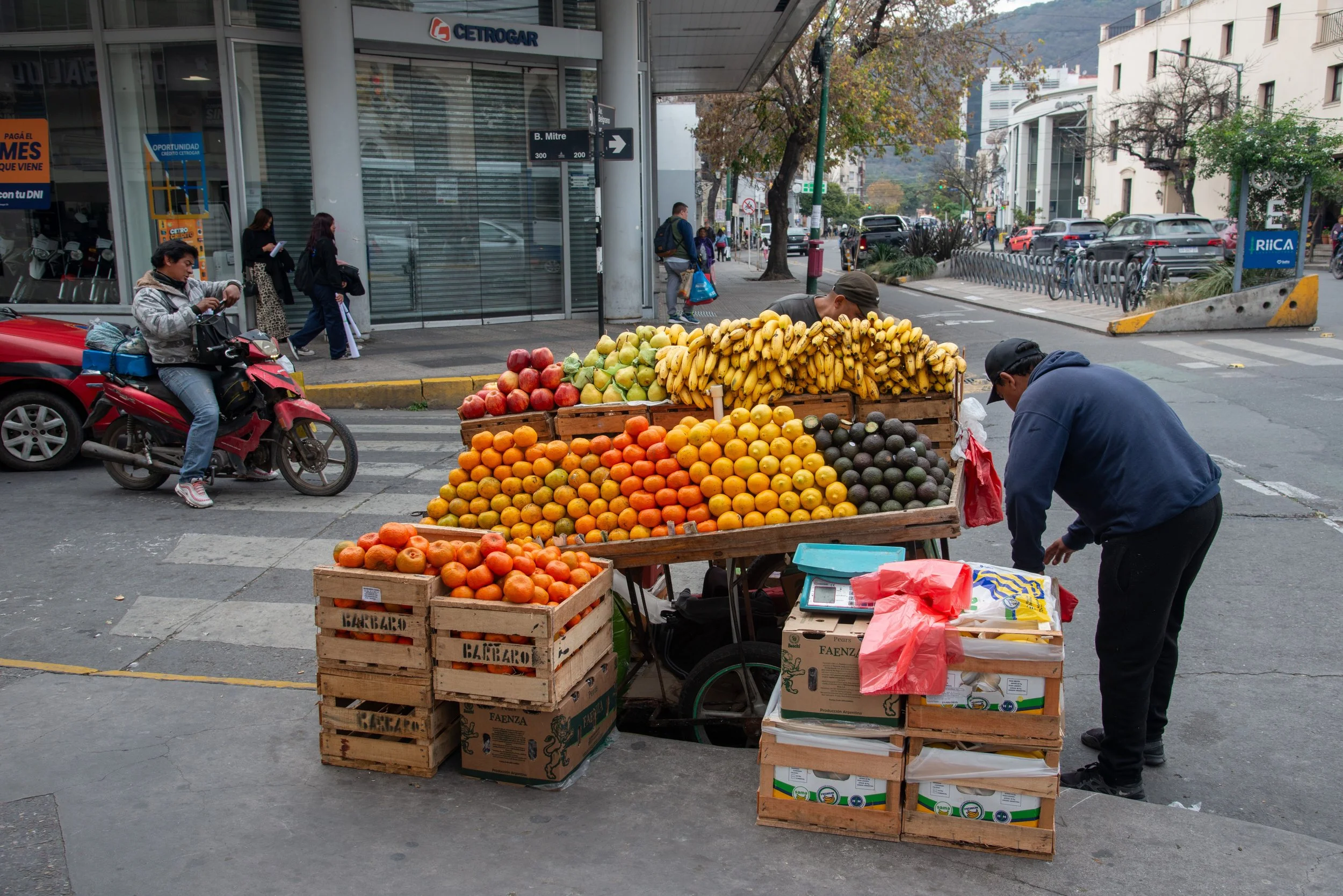
ICUH Conference Locations
Since 2002, the International Conference on Urban Health has been organized and co-hosted across North America, Latin America, Europe, Africa, Asia Pacific and Oceania — bringing global urban health expertise and leadership to each host city and generating local momentum for research and practice and building cross sector impact through partnership and research translation. In 2026, the conference returns to Latin America convening in Mexico City.

The Communities We Center
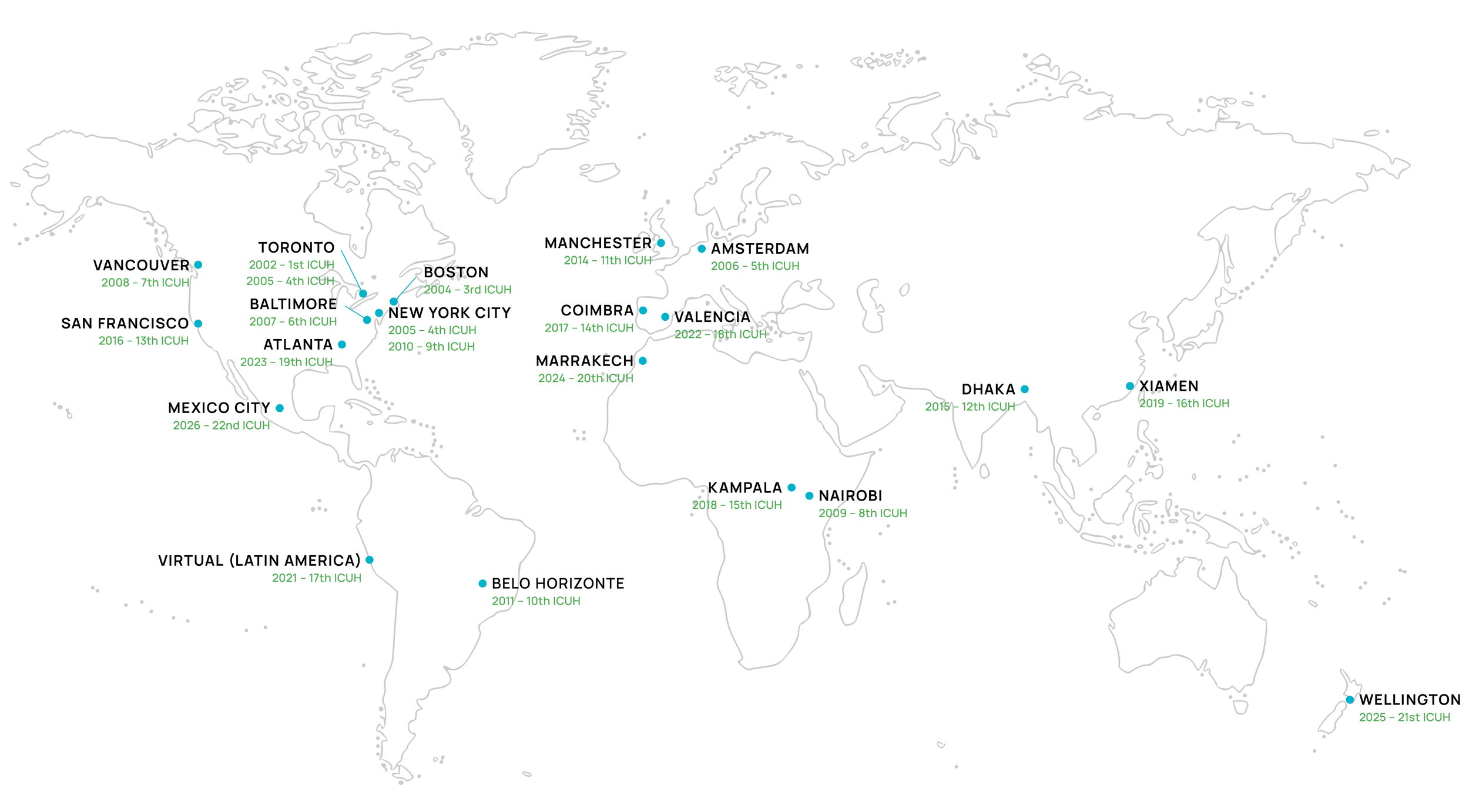
ISUH doesn’t measure impact by the number of cities or countries reached alone. We consider whether our work reaches the communities carrying the greatest burden of urban health inequity—and whether they have meaningful influence over the decisions, resources, and actions intended to improve their health.
Community engagement and co-design is substantive when residents help define the problem, shape the intervention, lead implementation, and interpret the results—not simply validate decisions made elsewhere. Their lived experience is essential evidence, revealing risks, assets, priorities, and practical solutions that external expertise alone cannot identify.
Success means that communities drive the work: priorities become more responsive, interventions become more relevant and trusted, and health and well-being improve in ways residents themselves value. We also look for benefits that endure beyond an individual project, including stronger local leadership, increased capacity, sustained partnerships, and approaches that communities and cities can continue, maintain, adapt, and scale.
This approach shapes how ISUH designs projects, evaluates impact, develops partnerships, convenes its conference, and builds its global membership.